As of late, few technologies have attracted as much investor excitement as human resources platforms, sending valuations soaring to dizzying heights. Deel, for instance, the platform providing hiring and payroll services for companies with international workforces, achieved a $12 billion valuation and generated over $500 million in ARR in just 5 years. And they are in good company - with Gusto worth $9.5 billion, Remote over $3 billion, and Rippling now $13.5 billion, the HR tech space is flush with fresh venture capital. And that is just the US. Across the pond, German HR platform Personio has risen to one of the most valuable startups in Europe, boasting a $8.5 billion price tag.
There are two main trends driving this flurry. The first is the growing demand for the consolidation of HR software with adjacent functions like finance and IT, with the aim of unlocking greater efficiency and scalability. When Rippling started out in 2016, the HR platform initially focused on easing employee onboarding. Since then, it has expanded to manage all aspects of employee data for its customers, including payroll, benefits, and mobile device management in one unified platform.
More established players like Workday (market cap of $56 billion) have gone down a similar path, offering customers a one-stop shop to manage finance, HR, planning & spend management in one unified platform.
The second trend is the surging popularity of hybrid working models, which has introduced countless new challenges for businesses in managing payroll, security, mobile device management and hiring across remote teams. Players like Deel or new upstarts like Remofrist are enabling distributed businesses to manage and pay employees and contractors globally without the hassle of setting up a local entity in every country.
What’s next for HR tech?
As unified solutions catering to HR, IT and finance achieve widespread adoption and hybrid working environments become the default, HR tech platforms must find new ways to enrich their offering with value added services to differentiate themselves in an increasingly homogenized market. Crucially, these services need to satisfy three conditions:
Seamless data integration
Any new service that is added needs to have a programmable interface that enables real-time data exchange to ensure the smooth interoperability of hiring, payroll and mobile device management along the entire employee lifecycle.
Security & data privacy
As more and more sensitive personal and financial data is concentrated into one centralized platform, the threat of a data breach is amplified, and the fallout becomes more far-reaching. New services must enhance security, as opposed to opening up further angles of attack.Cross-border scalability
To serve globally distributed teams, new services added by HR platforms need to scale internationally along with their customers’ geographic footprint.
The top contender: embedding global phone plans
Out of all potential cross-selling opportunities, phone plans stand out as the most promising contender. Modern teams need to have reliable mobile coverage at all times, especially in remote contexts where communication with colleagues, customers and suppliers happens digitally. Yet, the provisioning of phone plans remains disconnected from the employee lifecycle, forcing organizations to manually manage dozens of different telecom providers across countries using unwieldy spreadsheets. More cumbersome still, employees at smaller businesses will typically need to expense their work phone bill to their employer. The fact that contract terms don’t align with natural attrition cycles introduces further headaches for managing phone plans for employees.
Just imagine a company with teams spread across Europe, the United States and Latin America. To ensure all employees can do their job, the company needs to source and manage phone plans in every single country, each with different pricing, contract terms and interfaces. This becomes especially painful when employees on business trips incur hefty roaming fees for browsing abroad. And whenever an employee leaves the company, the contract either continues to run, effectively burning money, or it has to be reassigned to another employee manually.
Boosting revenue while driving down costs
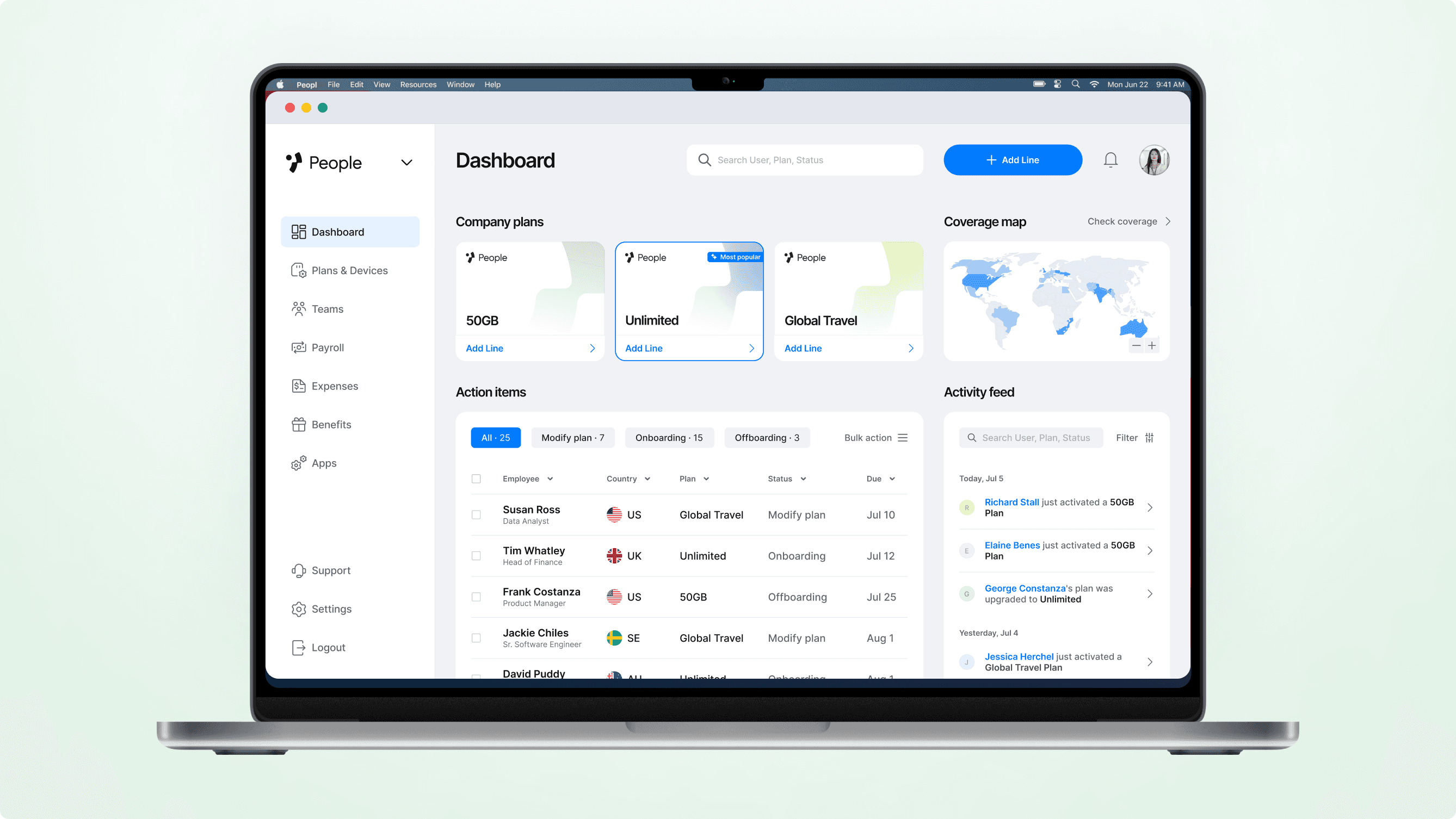
Providing employee phone plans fits neatly into the product line up of HR platforms. These plans could be programmatically managed through a centralized interface, giving businesses full transparency and control of each subscription at a glance.
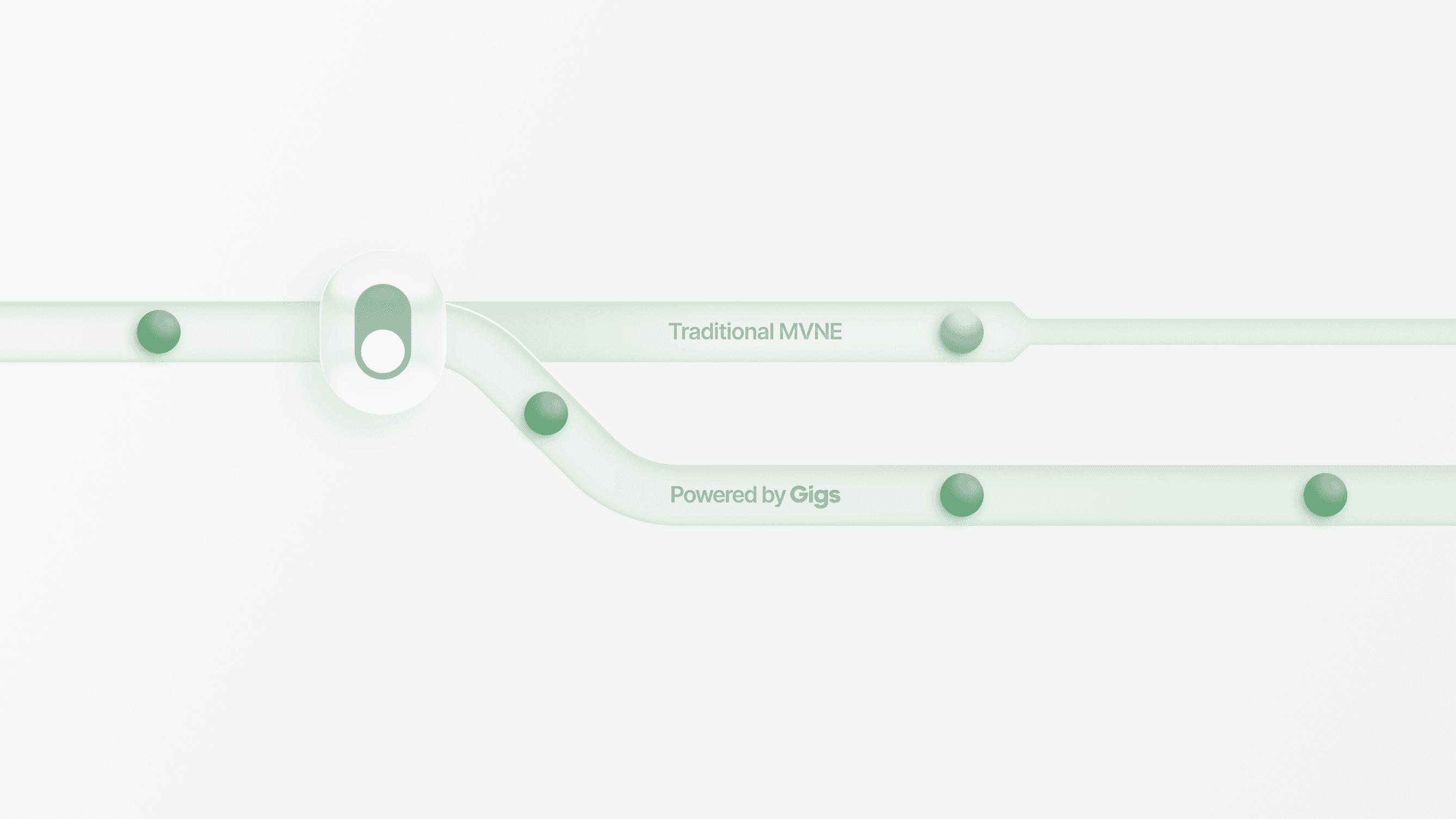
Some platforms may divert to selling through third-party phone plans on a marketplace. Besides losing out on margin, this approach has further glaring shortcomings. Deeply integrating phone plans ensures a seamless user interface, applying familiar UX patterns that reduce friction and learning curves. Bundled pricing also helps optimize costs and simplifies administration with fewer contracts to manage.
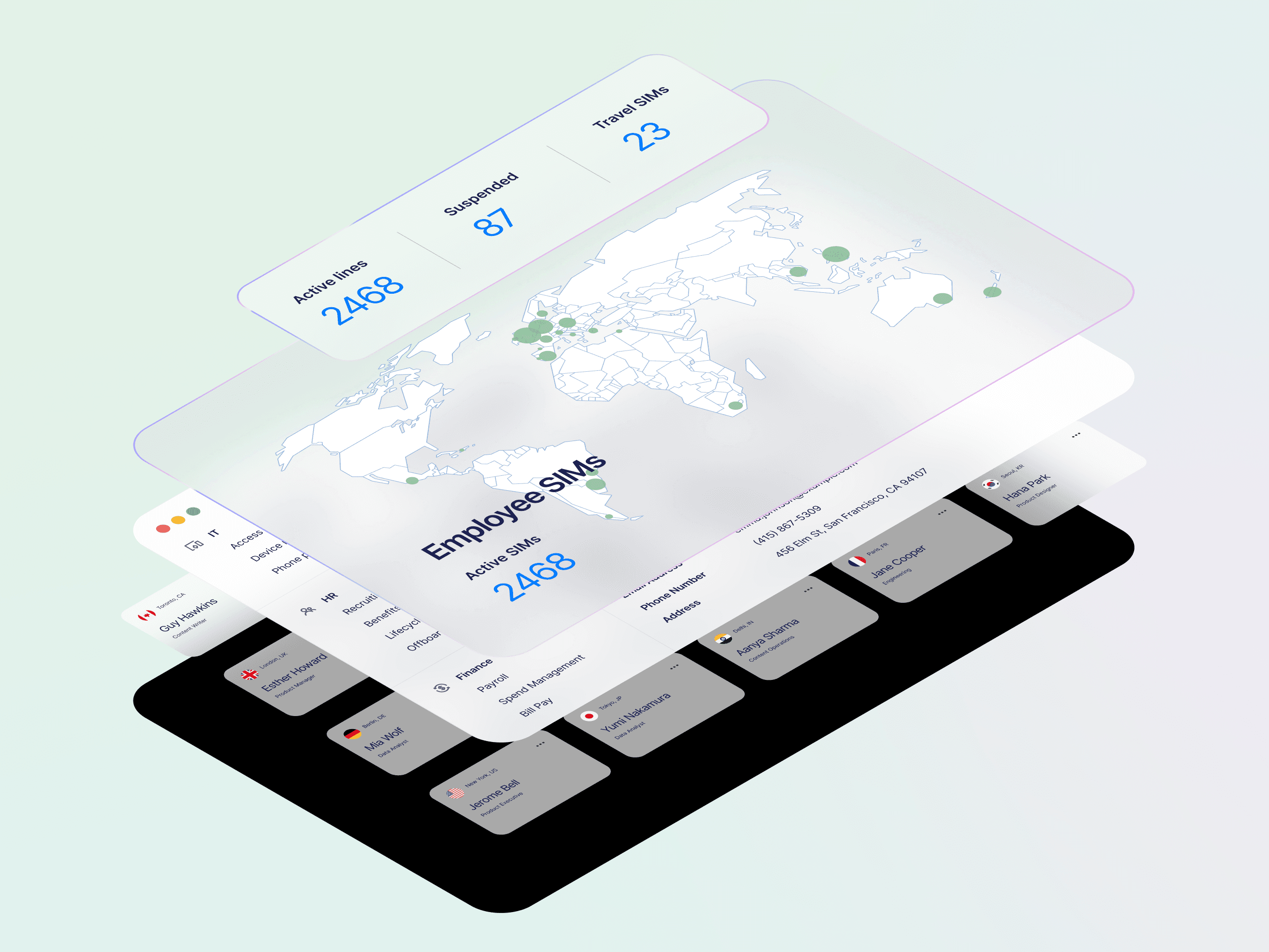
By embedding employee phone plans into their offering, HR platforms can tap into a new recurring revenue stream and enhance the stickiness of their platform. Seamlessly consolidating phone plans with HR also enables teams to simplify onboarding and offboarding processes, resulting in a smoother experience for employees and reduced costs for administrators. Further, incorporating phone plans serves as a unique selling point, helping platforms to differentiate themselves in a hotly contested market.
Scaling safely
A single platform for managing all aspects of employee devices and services also enhances security and control. If an employee is offboarded, for example, their phone could be automatically disabled, instantly locking them out of sensitive company data.
Centralized device and communication management also mitigates risks associated with sim swaps. The first hint of a suspicious event, such as a phone number being ported to another SIM, can trigger automatic SIM disablement.
The Solution? Gigs' Telecom-as-a-Service platform
Historically, technical and regulatory complexities have dissuaded businesses without direct experience in the telecom industry from selling mobile plans. But times are changing. Gigs breaks down the barriers to launching and monetizing a mobile service by enabling any business to offer their own branded phone plans directly through their app or website.
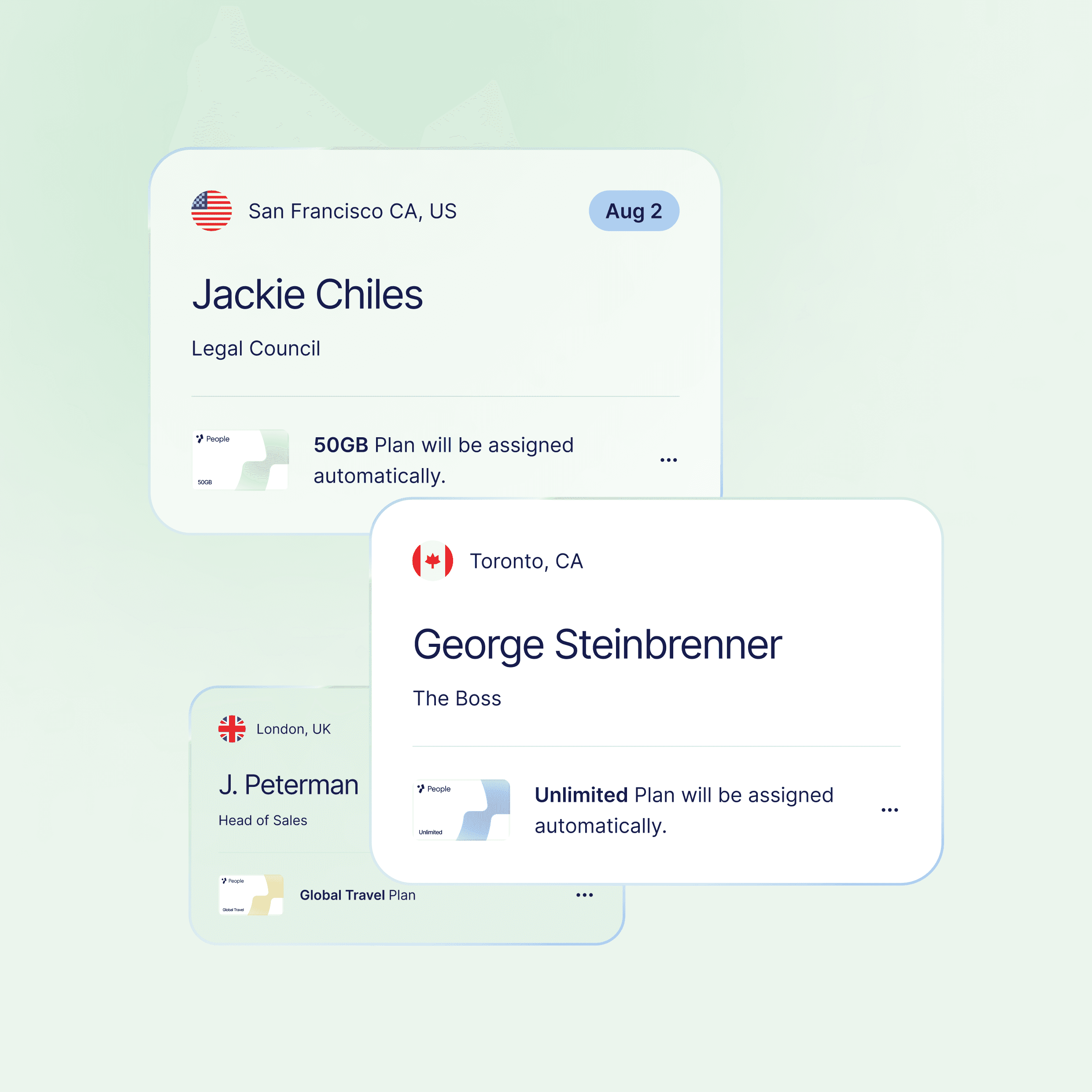
In practice, that means whenever a new employee or contractor is onboarded, they can activate their phone plan immediately from an email. One tap is all it takes to install their eSIM and get to work. No manual intervention, no tickets, no headaches.
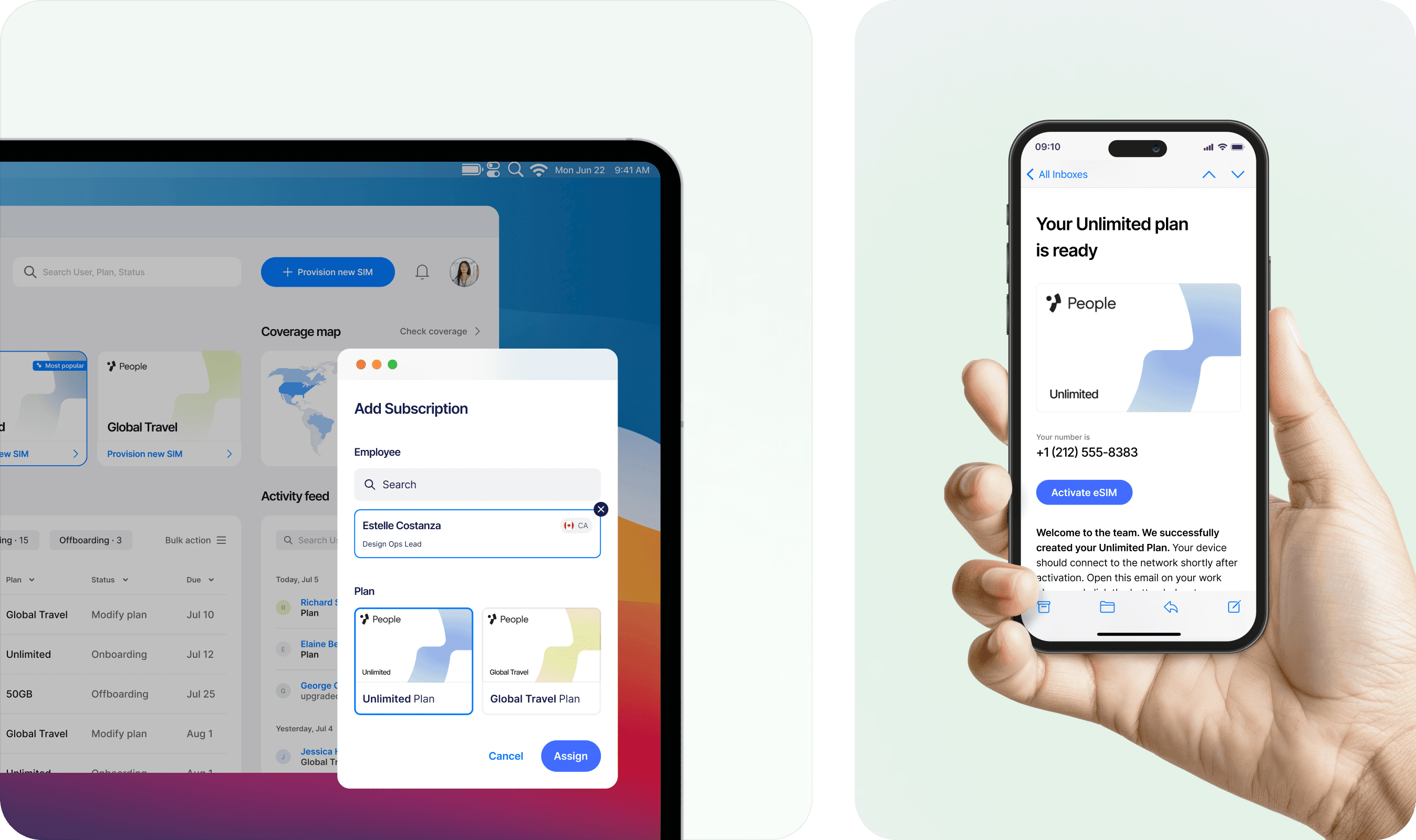
This end-to-end solution enables the swift and seamless integration of phone plans into HR platforms, allowing them to enhance their offerings, drive new revenue streams, and improve operational efficiency for their business customers. By leveraging Gigs’ platform, HR platforms could add connectivity to their core offering with minimal effort and marginal risk, and become first-movers in this space.